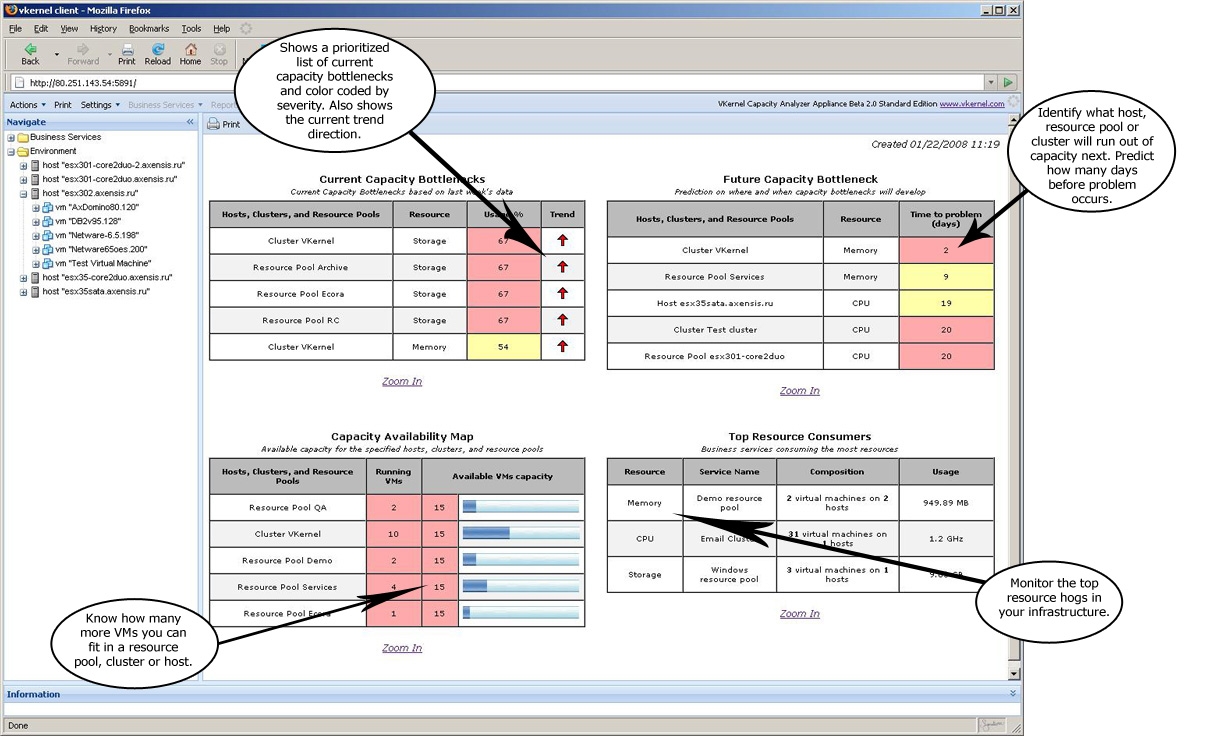
Imagine being able to instantly identify capacity bottlenecks on hosts, clusters and resources pools. Capacity bottlenecks, when not resolved, cause performance problems or even downtime. VKernel’s Capacity Analyzer Virtual Appliance immediately builds a list of current RAM, CPU, storage and network bottlenecks in your VMware infrastructure. It also predicts future capacity bottlenecks and alerts you when trends exceed customizable thresholds.
Wednesday, 30 January 2008
Capacity Analyzer Virtual Appliance
The launch of the Virtual Desktop Manager 2
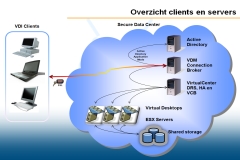
Today VMware launched VDM2 as a part of VMware VDI: Delivering Desktops from the Data Center. The abbreviation VDM stands for Virtual Desktop manager, the connection broker software that supports a VDI environment. I participated in the Beta and deployed VDM2 in a production environment. When Capgemini Outsourcing had obtained an outsourcing contract from office Furniture group Ahrend last September, it has taken over management of the office ICT environment and the service desk. As the senior system administrator at Ahrend I created a VDI pool with desktops. During the transition of all the hardware from the Ahrend Datacenter in Nieuwegein to the Capgemini datacenter in Amsterdam, the Ahrend ICT colleagues could easily move to the Capgemini office without losing their old desktop. There are two things I really like about VDM2; the first one is the automatic provisioning and the second one is USB support. VDM2 really made the transition to Capgemini run a lot smoother. VMware has asked me to act as a marketing reference for this launch, so I can speak to the press and author a quote. I already created an install and configure presentation which I presented to the Dutch VMUG audience last December. When you need any further information please let me know.
 Photo taken by Viktor van den Berg
Tuesday, 29 January 2008
2002 the year Live Migration was born
In 2002, a group of professors from three universities designed and implemented the NomadBIOS paravirtualized hypervisor, and were the first to show how a VM running a production-class operating system could be migrated between two hosts with almost imperceptible downtime, less than 100 ms. Such functionality, now commonly referred to as "Live Migration", has since become a hallmark of VM systems, and is supported in products from VMware, Citrix, Oracle, and planned in a future product announced by Microsoft. When you are interested in the background of this VMotion technique, you should really take a look at this PDF.
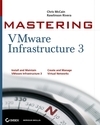
Mastering VMware Infrastructure 3
Mastering VMware Infrastructure 3 offers a strong design component followed by an in-depth look at the day-to-day tasks that make virtualization a key technology for any enterprise. Having access to a massive server infrastructure, the authors are able to provide real-world examples and best practices that apply to the integral parts of the virtual administrator's professional life. Topics include creating and managing virtual networks, creating and managing storage devices, migrating and importing virtual machines, managing and monitoring resource access, and protecting data.
VMware ESX 3.5 and VC 2.5 Upgrade Guide
This guide covers Mike Laverick's experiences of upgrading from VirtualCenter 2.0.2 to 2.5 and various methods of upgrading from ESX 3.0.2 to ESX 3.5. He upgraded the hardware setup he used for writing the long awaiting VMware Infrastructure 3: Advanced Technical Design Guide. The photo is taken by Viktor van den Berg at the TSX in Nice April 2007. Mike concludes with :
The ESX upgrade part is relatively easy – given that the upgrade process can modify your configuration (as in my SSH example) and that moving a VM off an ESX host is simple. I think I would still prefer to wipe my ESX hosts and do a clean install – adding them back into VirtualCenter. This is not without consequences. It means losing some of that precious performance data collected over a number of weeks or months.
VMware ESX Server in the Enterprise
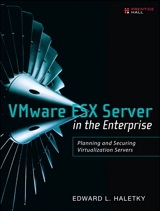
The Most Complete, Practical, Solutions-Focused Guide to Running ESX Server 3. VMware ESX Server in the Enterprise is the definitive, real-world guide to planning, deploying, and managing today’s leading virtual infrastructure platform in mission-critical environments. Drawing on his extensive experience consulting on large-scale ESX Server implementations, Edward L. Haletky brings together an unprecedented collection of tips, best practices, and field-tested solutions. More than any other author, he illuminates the real issues, tradeoffs, and pitfalls associated with ESX Server–and shows how to make the most of it in your unique environment. Haletky covers the entire lifecycle: planning, installation, system monitoring, tuning, clustering, security, disaster recovery, and much more. Throughout, he supports his recommendations with examples from real-world deployments. He also provides detailed checklists for handling crucial issues such as caching, networking, storage, and hardware selection. Many of his techniques and practices apply to all current virtualization platforms, not just ESX Server. This book will be an indispensable resource for every network architect, administrator, and IT professional who works with virtual servers. ESX Server newcomers will find the soup-to-nuts introduction they desperately need; experienced users will find an unparalleled source of field-tested answers and solutions.
VMware 88% fourth-quarter increase
VMware had $1.33 billion in revenue during 2007, an 88% increase from the year before. But the virtualization software vendor, which reported its latest financial results on Monday, didn't meet Wall Street's fourth-quarter expectations, and its stock price was hit hard in after-hours trading. The Palo Alto, Calif.-based company also toned down its business outlook for this year, forecasting a 50% increase in revenue for 2008 as a whole. VMware officials cited several reasons for the reduced growth rate, including the increasing size of the company's revenue base, which makes it harder to sustain a meteoric rise in sales. But they also acknowledged that there is more competition in the virtualization market, even if it was something of a backhanded compliment to rival vendors. For instance, Mark Peek, VMware's chief financial officer, said during a conference call about the results that there is "an increasing number of competing companies marketing their intent to introduce virtualization products." Read the full story at the source.
Sunday, 27 January 2008
John Troyer launches reddit virtualization
John Troyer recently has posted a new article on his weblog "VMware connected". It’s about the new virtualization section on reddit, a source for what's new and popular on the web -- personalized for you. Reddit wants to democratize the traditional model by giving editorial control to the people who use the site, not those who run it. Your votes train a filter, so let reddit know what you liked and disliked, because you'll begin to be recommended links filtered to your tastes. All of the content on reddit is from users who are rewarded for good submissions (and punished for bad ones) by their peers; you decide what appears on your front page and which submissions rise to fame or fall into obscurity. John Troyer will try to keep dropping links, but feel free to submit your own links -- good articles, articles from your blog, etc. Obviously, since John works for VMware, his links will be VMware-centric, but he’s interested in any virtualization, so feel free to contribute.
Eric Sloof is conducting an interview with John Troyer at the VMworld 2007,
The photo is taken by Viktor van den berg.
Thursday, 24 January 2008
An Interview with VCP-52
Last week I created the VMware LinkedIn Groups and received a lot of positive responses. One reaction caught my eye, it was a message from Robin Prudholm asking me if he could join the VCP group with VCP number 52. My first thought was “Wow VCP number 52�, I want to know more about that guy. One thing led to another and Robin was nice enough to answer a few questions. But first let’s start with a short introduction.
Robin Prudholm is a Senior Systems Engineer and Technical Spokesman for the Nordics at VMware for 3 years now, he lives nearby Copenhagen, Denmark. Robin has over 20 years of experience in the IT-industry.
I asked Robin if he experienced the VCP exam as difficult ?
Well, first exam was taken just after I got introduced to VMware and the fact that I was designated to be the first VMware instructor in the Nordics… I took the course with Richard Garsthagen and Brian Rice as trainers, and that did make it a bit easier as they both are top notch! Spend an additional 2 weeks reading like crazy (Linux part of it was all news to me, a long time MCSE with Windows as main focus) and took the test… Passed with 80% and had to have VUE reopen it, as I needed minimum 85% the VCI (*sigh*). Another week of intense studying and I was ready for another shot at it; passed with 92% (if memory serves me right, it is a while ago) and what a happy day… §;-)
Did being a VCP influence your career ?
It most certainly did… Being the first VCI in the Nordics and the only one doing training here for about a year, meant that I was able to build avery good network with all the Norwegian, Swedish, Finnish and Danish partner engineers/consultants coming for the training. VMware was just starting up their business in this region at that time, so it gave me an opportunity to be part of the virtualization revolution from day one. When VMware needed their first Partner SE in the region, I was lucky enough to make the move to VMware and what a great move that has been! VMware is a fantastic company to work for; not only is the technology cutting edge and just world class, the one thing that strikes me working for this great company, is the quality of the people working here. I have never in my entire career worked with so many talented colleagues, it is a fantastic team and a great inspiration!
Denmark is one of the leading countries in Europe why ?
Well, not just Denmark, but the Nordics in general have always been very technology ready… Customers here are very quick to adopt and embrace new technology, to take advantage of the business benefits that it brings to the table. I think there are primarily 2 main reasons for this
a. Tax is very high in this region (also on business) and that means wages are comparatively higher here, then in the rest of Europe/US. This means Nordic companies have to find other ways of cutting costs to be able to compete internationally and adopting new technology with real impact on the bottom line faster than the competition is certainly one way to achieve this.
b. Generally the level of education in the Nordics is very high, and I think that makes it easier to explain to customers the benefits of new emerging technology.
I can share the happy feeling with Robin when passing the exam above the 85%, it took me three times. When you want to know more about VMware activity in the Nordics, you should visit http://www.vmug.dk using an online Danisch translator.
VMworld Europe Videos
Richard Garsthagen over at Run-Virtual.com created some introduction video’s to warm you up for Europe’s virtualization event of the year.
Richard - General Introduction
Carter - Simplifying VMware Automation with PowerShell
Bing - NFS & iSCSI - Performance Characterization
Ashwin - Best Practices for deploying VI3 v3.5 in your environment

Wednesday, 23 January 2008
vmSight Releases Report Pack
 vmSight, the first and leading provider of virtual network intelligence, announced the first report pack release for its product suite. Offering key intelligence data required for IT planning, IT accounting and IT auditing, the report pack consists of easy-to-add templates that enable scheduled reports, approval workflows and alerts within vmSight’s virtual network intelligence product suite, which provides extensive analytics and alerts on all activities within virtual networks. Report Pack Templates Include System Management and HIPAA & PCI Compliance Reports for Virtual Networks.
Tuesday, 22 January 2008
Java Virtual Interface for VMware, Xen and KVM
Introducing ivi - a Java Virtual Interface for VMware, Xen, KVM, and OpenVZ, ivi (pronounced eve-e) stands for Java Virtual Interface and it is a project that aims to create a single, graphical, management interface for all the major virtualization products. ivi is implemented in Java+Swing, so it is truly portable. Currently ivi uses the VI3 SDK to communicate with VI servers and the XenApi to talk to Xen servers. Future plans include adding support for libvirt to allow communication with KVM and OpenVZ, and eventually support for the Common Information Model (CIM) as a way to talk with VMware, Xen, and Microsoft all through one interface.
You can read more about ivi at http://www.lostcreations.com/code/wiki/ivi.
Change Reporter for VI 3
New on vm4all.com Change Reporter for VI 3Â : Change auditing is an important process for controlling the management of your virtual environment, to limit unauthorized changes and errors in VI3 inventory. Erroneous and unauthorized changes usually occur every day in organizations in which many IT professionals manage different aspects of virtual infrastructure. Such changes can cause failures and outages in your virtual infrastructure. NetWrix Change Reporter for VMware Infrastructure 3 audits all changes and enforces controlled change management processes across your virtual environment. This freeware tool sends a daily report pointing to every change made to your ESX servers, folders, clusters, resource pools, virtual machines, and their hardware (*), including previous and current ("before" and "after") configuration values.
Title | Change Reporter for VI 3 |
Company | NetWrix Corporation |
License | Freeware / Commercial |
Author | NetWrix Corporation |
Website | http://www.netwrix.com |
Scott Herold Lead Architect at Quest
Quest announced it has completed the acquisition of Vizioncore, a leading provider of disaster recovery and other products for virtual infrastructure management. Initially acquiring a controlling interest in Vizioncore in 2005, Quest broadened its virtualization product portfolio in 2007 with the acquisitions of Invirtus, a provider of virtual machine optimization, conversion and automation products, and Provision Networks, a leader in virtual client and desktop management solutions. Quest has also added industry visionary Scott Herold to the virtualization business as its Lead Architect. “Scott is a recognized expert in the field of virtualization. I look forward to leveraging his unique blend of practical experience, market knowledge, and visionary thinking across the entire virtualization business.� Scott will Generate new product ideas and enhancements into growing line of virtualization products. He also will review market trends to determine key technologies for integration with existing technologie and perform technical analysis of potential acquisition targets in the virtualization space. The photo was taken by Viktor van den Berg during the TSX 2007 event in Nice where I conducted an interview with Scott about the upcoming VI3: Advanced Technical Design Guide.
Monday, 21 January 2008
Chargeback and Cost Visibility workshops
Dave Repczynski and his VKernel crew have recently finished up a series of online Chargeback and Cost Visibility workshops with VMware's Expert Sessions and now they're scheduling a bunch of live sessions. If you're interested or know some else that is, just sign up here. The workshops are purely to learn and focus on industry best practices and standards.